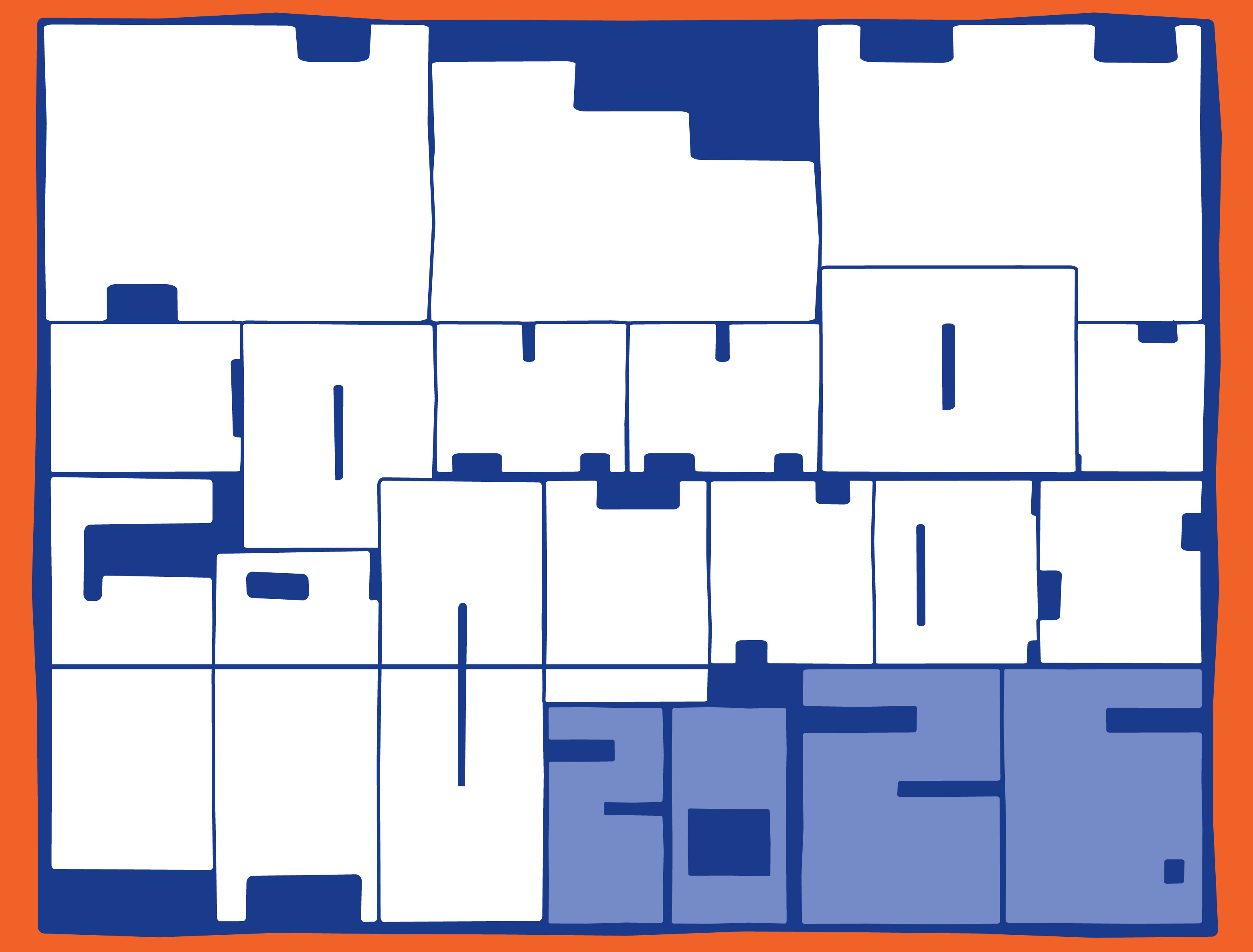
NEW COMMON GROUNDS CONFERENCE 2026 SINGAPORE 23 JULY – 25 JULY
ABOUT
Organised since 2019, the New______Grounds forums aim to foster camaraderie between architecture students across seven Southeast Asian countries as well as Taiwan, and to generate critical discussion about key topics related to academia and the profession. Previous themes include New Creative Grounds (2019), New Resilient Grounds (2020), New Public Grounds (2021), New Vernacular Grounds (2022), and New Interpretive Grounds (2023).
The theme for our 2026 forum is “New Common Grounds”. As it is the commencement of a new series, the choice of the adjective “common” reinstates the similar convictions and aspirations of participating institutions and people involved from prior forums. The term “commons” and its corollary “commoning” are also gaining acceptance and activation for a movement to graduate top-down and bottom-up initiatives and actions, so that better social and physical environments may be achieved and perpetuated for different stakeholders. For this forum, the abovementioned manifestations of “common” offer a central theme to convene the series of lectures by academics and experts, guide development of student projects, and serve as selection criteria for exhibition projects at the physical event.
COMPONENTS
Online talks
The online talks bring together renowned speakers across the region with the aim of unpacking the theme of New Common Grounds, foregrounding its relevance, but also raising pertinent questions as a critical barometer of how we can respond to wide-ranging issues.
Exhibition
The exhibition for New Common Grounds is conceived as an adaptive framework that foregrounds participation, reconfiguration, and collective agency. Drawing from the theme of commoning, the design repurposes structures and materials from an earlier exhibition by the Social Design Lab (SoDL) at NUS DOA, extending the life of these components through new spatial and curatorial relationships. In doing so, the exhibition treats reuse not only as a practical strategy, but as a reflection on shared resources, memory, and the continual reinvigoration of objects that once hosted other ideas and exchanges.
Students selected by each of their institutions will have their projects featured in the New Common Grounds exhibition that runs concurrently with the conference. The aim of the exhibition is to showcase the rich and diverse approaches that are being explored by institutions across the region in response to the theme of New Common Grounds.
Exhibition Coordinator: Associate Professor Christo Meyer
Design campuran
The Design Campuran (previously known as the Student Roundtable) has two main components: online (pre-conference) and in-person (at conference). Participating students, consisting of diverse representation of nationalities and institutions, are divided into four main groups, each with an academic as Group Leader. These groups meet intermittently online to discuss specific topics that came out of the Online Talks. These online group work and discussions will result in an in-person forum at Archifest on 24 July 2026, where students will present their findings to a live audience of both New Common Grounds delegates and Archifest visitors.
Design Campuran Coordinator: Assistant Professor Saptarshi Sanyal
Pedagogy roundtable
The Pedagogy Roundtable brings together academics and educators through an in-person forum at Archifest on 24 July 2026. The roundtable is divided into two sessions, wherein each, a thematic question relating to the New Common Grounds is discussed and debated. This important roundtable aims to foster a deeper understanding of how academic institutions across the region deal with these topical issues, both from the perspective of curriculum relevance and how knowledge is transferred, researched and applied.
Pedagogy Roundtable Coordinator: Assistant Professor Peeraya Suphasidh
Design reviews
The Design Reviews bring together participating students in a review setting where ideas and proposals are not only presented but further investigated through dialogue with a judging panel that consists of both practitioners and academics from the region. The Design Reviews takes place in groups of three. Three students with projects of similar or related aspects present and then mutually review each other’s project. This will be followed by discussion from a panel of discussants.
All student projects go through a pre-selection by the judging panel by evaluating submitted project videos and exhibition panels. Students who will be presenting their work during the final reviews on 25 July, will be notified the day before. The Design Reviews take place over two sessions; one in the morning and one in the afternoon.
Design Reviews Coordinator: Assistant Professor Robin Hartanto Honggare
Discover more
Keep up with New Common Grounds online
Designed with WordPress